The Speed Check That Switches Off Just When You Need It Most
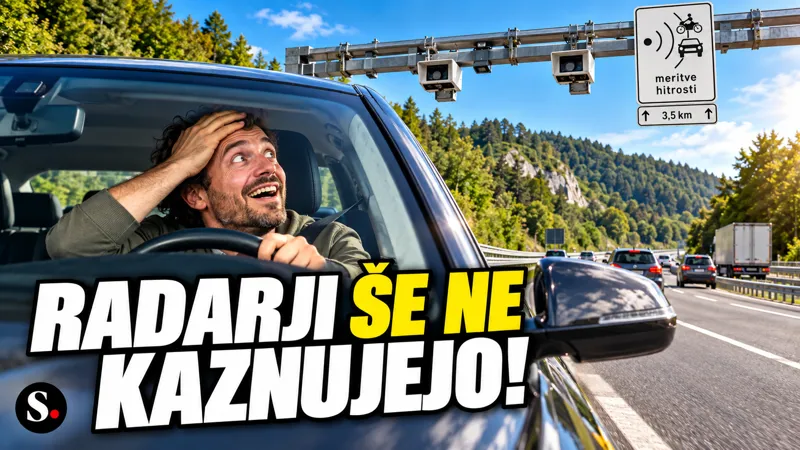
DARS, the state motorway company, has collected all four green lights for section speed control, but by its own explanation the system will not measure while roadworks are under way.
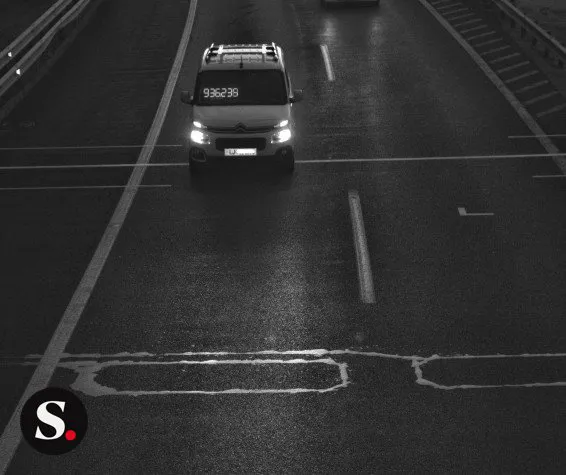 Illustration: AI
On 16 September 2026, the metrology office (the state measurement authority) completed verification of the last of four sections where section speed control is meant to start. It covers twelve kilometres of the Štajerska motorway from the Podmilj tunnel to Ločica, in the direction of Maribor. All formal conditions are now met. There is still no date when the system will actually start measuring.
Among the documents you have to read for this, one is more awkward than the rest. Not because it hides anything, but because DARS wrote it itself.
What they said in passing
In the explanations about the new system there is one sentence that the Slovenian Press Agency (STA) reported without any special emphasis, and the others followed:
"The system will not operate while works are under way on the sections in question. Likewise, the section speed control on the sections will not adapt to any operation of the system for dynamically adjusting speed limits to road conditions." (translated)
Read that again. A narrowed lane, a work vehicle, a worker in an orange vest, an 80 km/h limit: the meter does not measure. When the electronic gantries drop the limit from 100 to 60 because of rain or a tailback, section control ignores it. So it works precisely in conditions when the motorway is dry, empty and clear.
Speed enforcement is switched on when it is needed least.
Nine years and one direction
DARS knows this technology. In January 2017 it published a press release with a headline that sounded like progress:
"On the section of the Štajerska motorway between Trojane and Podmilj, towards Ljubljana, from Monday 30 January, from 7 a.m. onwards, a system for measuring average driving speed will start operating, on the basis of which the police will fine offenders." (translated)
The same hill. The same technology. Nine years earlier. The same release also explained exactly why section control is better than stationary radars: a driver has to respect the limit over a longer stretch and not just a short one. The argument was familiar in 2017. The tender for the new system came later, and according to DARS more than four years passed from the first tender for choosing a supplier before the system even reached formal permits.
The new setup at Trojane measures in the opposite direction from the 2017 one: towards Maribor, not towards Ljubljana. What happened to the direction that was labelled more problematic in 2017, partly because of a fatality, none of this year's explanations say.
Cameras that should not have been removed
The last section was late because of a fault at the measuring point. The metrology office carried out the first measurements at Trojane in mid-August, after which DARS fixed deficiencies and, in doing so, removed cameras that it should not have. The verification therefore started over.
The meters are iCar5 units from the Belgian manufacturer MacQ, and the supplier is the company Intermatic. Before handover it must still carry out training and full integration into the police information system. The police will then test the system. Only then will a date be known.
At this stage DARS said this much:
"We are currently in the phase of checking whether the system meets all the conditions." (translated)
Four points, not a network
There are four sections: the Trojane tunnels towards Maribor, the Višnja Gora hill towards Novo Mesto, Logatec-Vrhnika towards Ljubljana, and Ljubljana Brod-Vodice towards Kranj. Together that is a few tens of kilometres of the motorway cross. Everything else stays as it was.
DARS stresses that the aim is not to punish drivers but to calm speeds and improve road safety. That is probably true. The trouble is that a system that switches off during roadworks and does not follow dynamic limits calms traffic when traffic is already calm by itself.
Three questions remain that nobody has answered: how much the system cost, why more than four years passed from the tender to the permits, and who was responsible for the cameras being removed in the middle of verification.
Drivers will be notified in advance of the start of measuring, DARS promises. That is the only date we have: a promise that we will be told one.
Sources
- DARS: Policija in DARS za večjo varnost tudi z meritvami hitrosti (27. 1. 2017)
- Žurnal24 / STA: Sekcijskega merjenja še ne bo, pojavil se je nov zaplet (4. 9. 2026)
- RTV SLO: Dars bo voznike vnaprej obvestil o začetku sekcijskega merjenja hitrosti (4. 9. 2026)
- 24ur: Zeleno luč dočakal še četrti odsek. Ovir za sekcijsko merjenje ni več (16. 9. 2026)
Saj ni res. is an independent Slovenian newsroom. This is an English translation of our Slovenian story; the Slovenian original is authoritative.