Starlink capped Ukrainian drones at 160 km/h, and Musk points to Washington
Musk does not deny the limit. He only says it is not his: the speed of the military Starshield system is decided by the US military and, in the end, the president. Washington is silent.
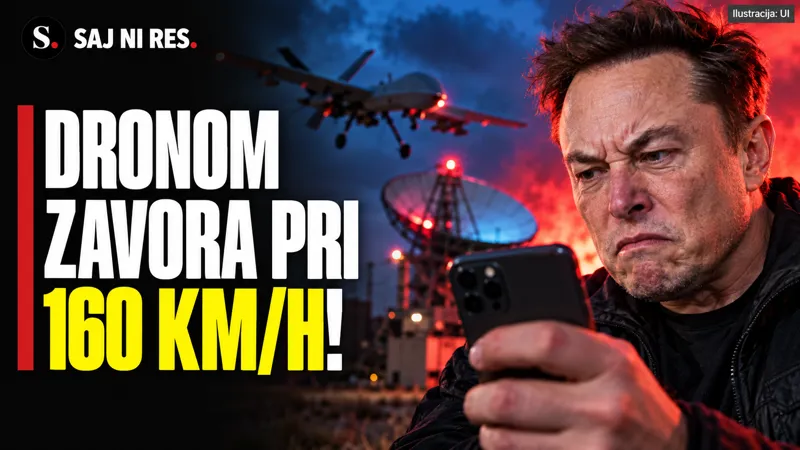 Illustration: AI
On Tuesday evening, the Starlink satellite system capped the speed of Ukrainian weapons at 160 kilometres per hour. Anything that moved faster lost its connection to the network. It is through this very network that Kyiv guides drones towards Russian targets and protects its airspace.
Elon Musk responded on the social network X to Ukrainian requests to restore the system to full operation, and shifted the blame across the Atlantic:
"Starshield systems are owned and controlled by the US government. Any speed or usage limits are decided by the US military and ultimately the US president." (translated)
The distinction matters. Starlink is a civilian service, while Starshield is a variant for government and military use. Both systems were designed by Musk's company SpaceX, and Ukraine uses Starshield on the battlefield. Musk added that Starlink is intended for civilian or defensive activities and cannot be used for offensive military operations, as that would be inappropriate for a commercial company.
An important detail: Musk nowhere wrote that the US government ordered the limit. He hinted at who decides, not at who decided. The US government did not respond to his words.
In Kyiv, however, they have no doubts. Sergij Beskrestnov, an adviser to President Zelensky, wrote on Wednesday:
"It is clear that this action cannot be a coincidence and that it is linked to the current political situation." (translated)
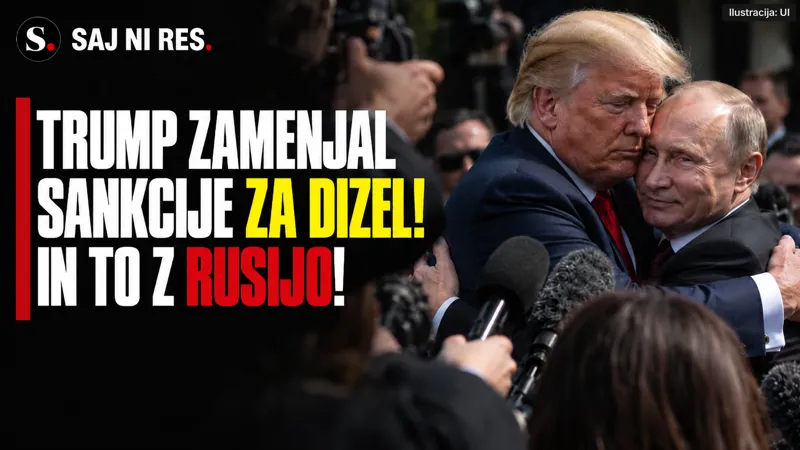
The political situation is this: ahead of the November midterm elections, and because of rising fuel prices, Donald Trump is pressing Ukraine to stop attacking Russian energy infrastructure. A few days ago he struck a deal with Vladimir Putin on importing Russian diesel into the US. According to 24ur, it involves 300,000 tonnes. Zelensky claims the Americans threatened to limit the exchange of intelligence data if he does not sign Trump's energy agreement. Trump denied this on Tuesday.
The limit was introduced during heavy Russian attacks. At least 600,000 people across the country were left without electricity, and communications and energy facilities used by the Ukrainian army were also hit. On Wednesday evening the problem was partly resolved. Former defence minister Mihajlo Fedorov thanked Musk, but warned what remains essential:
"Full removal of the speed limit in the starshield system is now key to Ukraine's defence." (translated)
During a visit to London, Zelensky called on Musk to restore the satellite service, and described the disruption as a big mistake. At the same time, he admitted he feels betrayed because the US struck a deal with Russia on importing diesel. He added that the matter is more complicated than how he feels about it.
Starlink has operated in Ukraine since the start of the Russian invasion in 2022. In August, Zelensky said that Kyiv is trying to develop an alternative in cooperation with an unnamed European country.
Sources
- Musk namignil, da za upočasnitvijo sistema Starlink v Ukrajini stoji ameriška vlada
- Kdo je Ukrajini upočasnil internet?
- Blokada ukrajinskih dronov: Musk s prstom pokazal na ameriško vlado
- Musk namignil, da je za omejitev delovanja Starlinka v Ukrajini kriv Trump
- Musk namignil, da je za upočasnitev sistema Starlink odgovorna ameriška vlada
- Musk namignil, da je za upočasnitev sistema Starlink odgovorna ameriška vlada
Saj ni res. is an independent Slovenian newsroom. This is an English translation of our Slovenian story; the Slovenian original is authoritative.